JUST Water — paper-based carton
Cartons are ~88% renewable materials (FSC-certified paperboard plus plant-based plastic cap and shoulder). See our carton water brands guide and JUST vs FLOW comparison.
Packaging material, transport distance, and how many times you refill a bottle matter far more than any single brand's marketing. Here is what actually moves the carbon footprint of bottled water.
Four levers dominate the lifecycle footprint of a bottle of water — everything else is rounding error:
CO₂e ranges below are indicative, drawn from published lifecycle assessments. They cover production + average transport and exclude end-of-life recovery. Treat them as category-level benchmarks, not brand-specific figures.
| Material | Approx. carbon footprint | Recyclability | End-of-life note |
|---|---|---|---|
| Virgin PET plastic | ~120–200 g CO₂e / L (bottle production + transport) | Widely recyclable as #1 PET | Only ~30% of US PET bottles are actually recycled; most are landfilled or incinerated. |
| Recycled PET (rPET) | ~60–110 g CO₂e / L (lower input footprint) | Identical recycling stream to virgin PET | Reduces virgin fossil-fuel use; still single-use, still leaks microplastics. |
| Aluminum can / bottle | ~160–250 g CO₂e / L for virgin aluminum; far lower with high-recycled-content (~60–120 g) | Infinitely recyclable with no quality loss | ~50% US recycling rate for cans — the highest of any beverage container. |
| Carton (paper-based, e.g. Tetra Pak) | ~80–140 g CO₂e / L | Recyclable where carton infrastructure exists (limited US coverage) | Mostly paperboard from FSC sources, but multi-layer construction complicates recycling. |
| Glass (single-use) | ~300–700 g CO₂e / L (heavy, energy-intensive to produce and ship) | Recyclable, but heavy | Lowest footprint only when refilled/reused locally (e.g. dining service). |
| Reusable bottle + tap or filtered water | <5 g CO₂e / L after the break-even number of refills | Reuse for years | By far the lowest-impact option for everyday hydration. |
Water is one of the heaviest things you can ship. A litre weighs a kilo, so transport emissions scale almost linearly with distance — and with the weight of the packaging that surrounds it.
A French or Italian glass-bottled mineral water arriving in California has typically travelled 9,000+ km, often in a heavy glass format that doubles the cargo weight. Even a virgin-PET bottle sourced 100 km from your home will usually beat it on lifecycle carbon, regardless of how natural the imported source is.
If you live in the US, look at brands sourced within your region — Mountain Valley (Arkansas), Saratoga (New York), Crazy Water (Texas), Tourmaline Spring (Maine), Proud Source (Idaho) — before reaching for European bottles for everyday drinking. Save the imports for specific occasions where the mineral profile genuinely matters.
Reusable bottles are not automatically greener on day one. Manufacturing a stainless-steel or insulated bottle takes meaningfully more energy than producing a single PET bottle. The crossover point — where the reusable starts winning — depends on material:
For anyone using a reusable daily, those thresholds are reached in weeks. The only way to lose this trade is to buy a new reusable every few months — the durability is the whole point.
We only include claims that brands publish themselves or that are verifiable from third-party sources. Marketing language like "eco" or "green" without specifics is not listed here.
Cartons are ~88% renewable materials (FSC-certified paperboard plus plant-based plastic cap and shoulder). See our carton water brands guide and JUST vs FLOW comparison.
Single-source artesian spring in Ontario, FSC-certified carton, B-Corp certified. Detailed in our carton water guide.
Reusable aluminum bottle with a wide mouth designed for refilling. See aluminum bottled water brands and the PATH vs Proud Source comparison.
Both publish recycled content and packaging specifications. Covered in our aluminum and carton roundups.
5-gallon and large-format glass bottles are returnable in select markets, dramatically lowering per-litre carbon when reused. See the full glass bottled water guide.
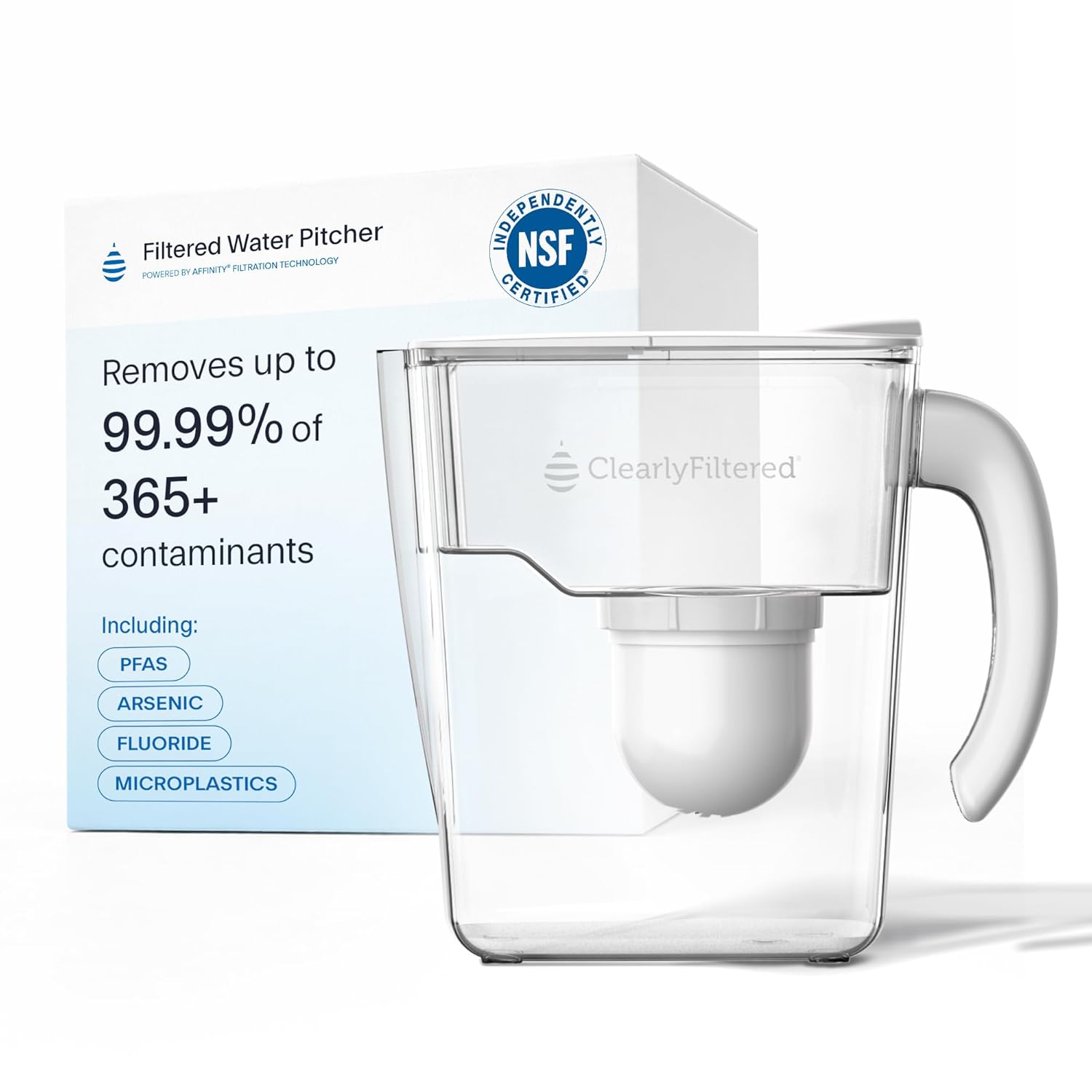
For everyday hydration, the lowest-carbon, lowest-cost answer is almost always the same: a reusable bottle, refilled from a filtered tap. A decent activated-carbon pitcher or under-sink filter removes chlorine taste and most common contaminants, and the per-litre footprint is one to two orders of magnitude below anything you can buy bottled.
See our best refillable water bottles guide and the water filters category in the shop for hand-picked options.
Curated picks that lower the per-litre footprint of your hydration. As an Amazon Associate we earn from qualifying purchases.
Disclosure: BotledWater may earn a commission from qualifying purchases made through links on this page. This does not affect our editorial standards or product comparisons. See our Affiliate Disclosure for details.

Naturally alkaline Canadian spring water in eco-friendly cartons.
 Eco
EcoSparkling mountain-sourced water in a 100% recyclable, plant-based carton — eco-friendly bubbles.
 Eco
EcoRefillable aluminum bottles with purified alkaline water — reusable & recyclable.
Affiliate disclosure: links above may earn BotledWater a small commission at no extra cost to you.
Single-serve bottled water is never genuinely low-carbon, but among packaged options, locally-sourced brands in high-recycled-content aluminum or paper cartons (e.g. PATH, Open Water, JUST Water, FLOW, Boxed Water) typically out-perform imported glass or virgin PET. The lowest-impact 'bottled water' is filtered tap water in a reusable bottle.
For single-use packaging, aluminum usually wins on full lifecycle because it is lighter to ship and recycled at a much higher rate than glass. Glass is the most sustainable choice only when it is refilled in a closed loop (e.g. returnable bottles at restaurants), where its impact drops sharply per use.
Cartons (Tetra Pak / SIG style) have a meaningfully lower production footprint than glass or virgin PET because most of the structure is paperboard from FSC sources, and the format is light to ship. The catch is end-of-life: cartons need specialised recycling that is unavailable in many regions, so they often end up in landfill.
Independent lifecycle studies estimate the break-even point at roughly 10–50+ uses, depending on the bottle's material — plastic reusables reach break-even fastest, stainless steel and insulated bottles take longer because they are more energy-intensive to manufacture. After break-even, every additional refill is essentially carbon-free water.
In most developed countries with regulated municipal water, tap water has a footprint hundreds of times lower than bottled water and is generally as safe or safer. A simple carbon-filter pitcher or under-sink filter handles taste and chlorine. Bottled water is best treated as a convenience or a specialty product, not a daily hydration source.